📄 Digital book in PDF · read it on your phone or print it
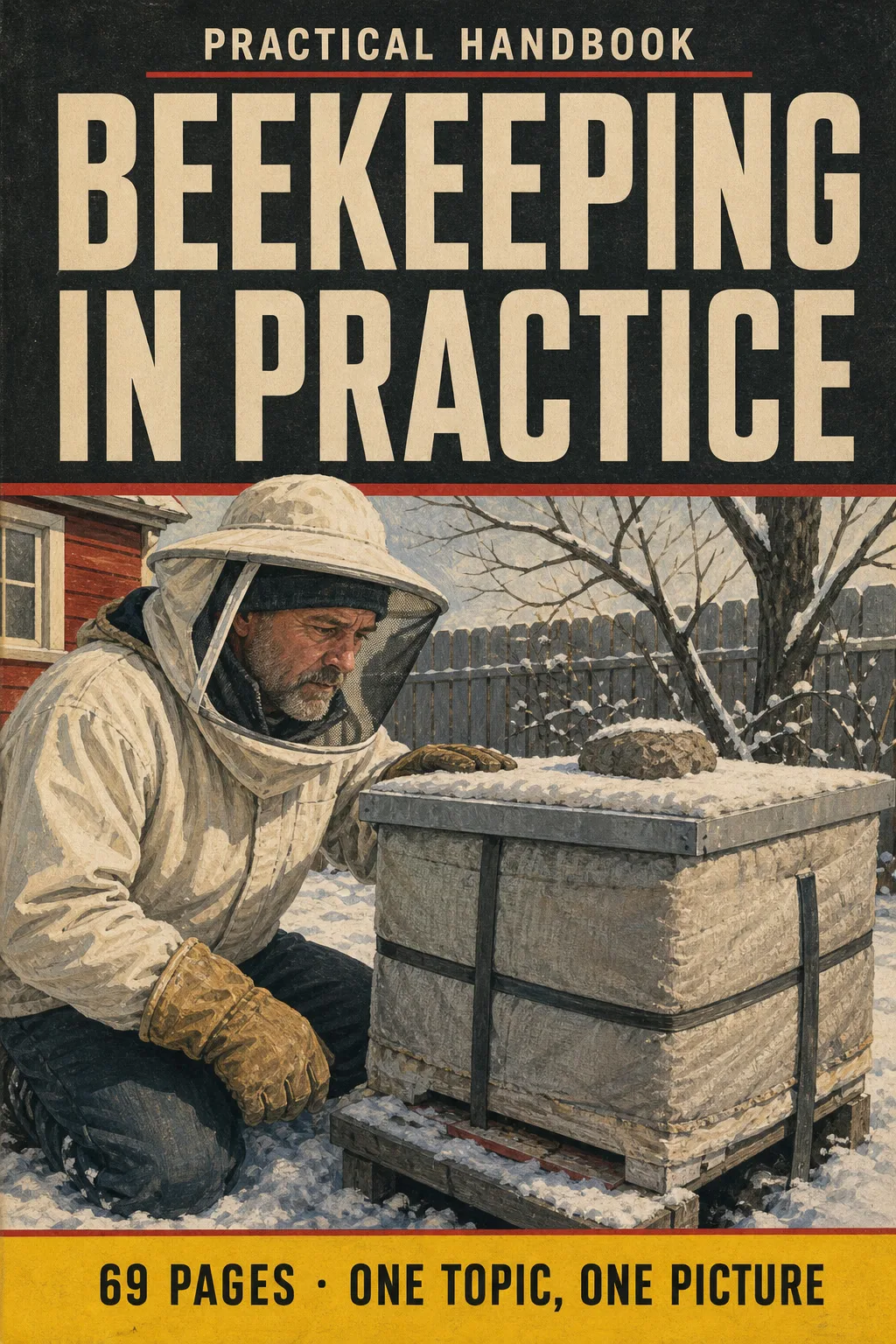
From the boxes of a Langstroth hive to your first spring check: the four-step inspection, what's on each frame, queen cells, the winter cluster, counting varroa and the signs of disease. One topic per page: first the drawing, then what you need to remember. 69 illustrated pages.
🔒 Secure checkout · PDF by email · 30-day guarantee
Every page has one large drawing and a box with the numbers and steps you need to know:


Swipe to see more →
These are real pages from the book. The table of contents is the full one: 7 parts and 65 topics.
It's May. You lift a frame out of the brood box and there they are: three peanut-shaped queen cells. Your hands stop, and you can't tell if the colony is about to swarm or replacing its queen.
You read about it all winter. But the manual explains swarm, supersedure and emergency cells in long paragraphs, and not one of them shows you where on the frame each cell sits.

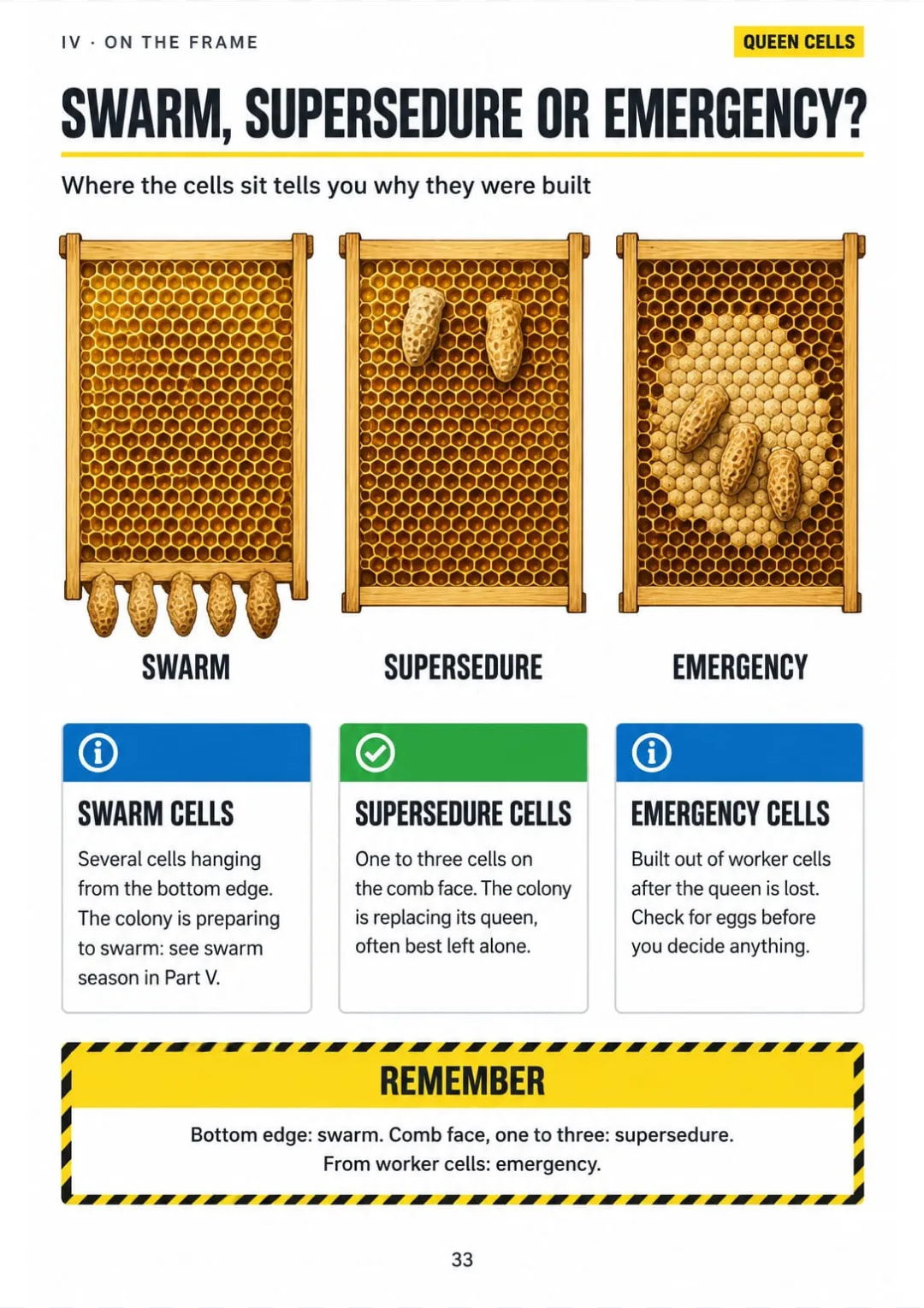
In the book, it's one page. Swarm cells hang along the bottom edge, supersedure cells sit on the face of the comb, emergency cells are built from worker cells. One drawing, three positions.
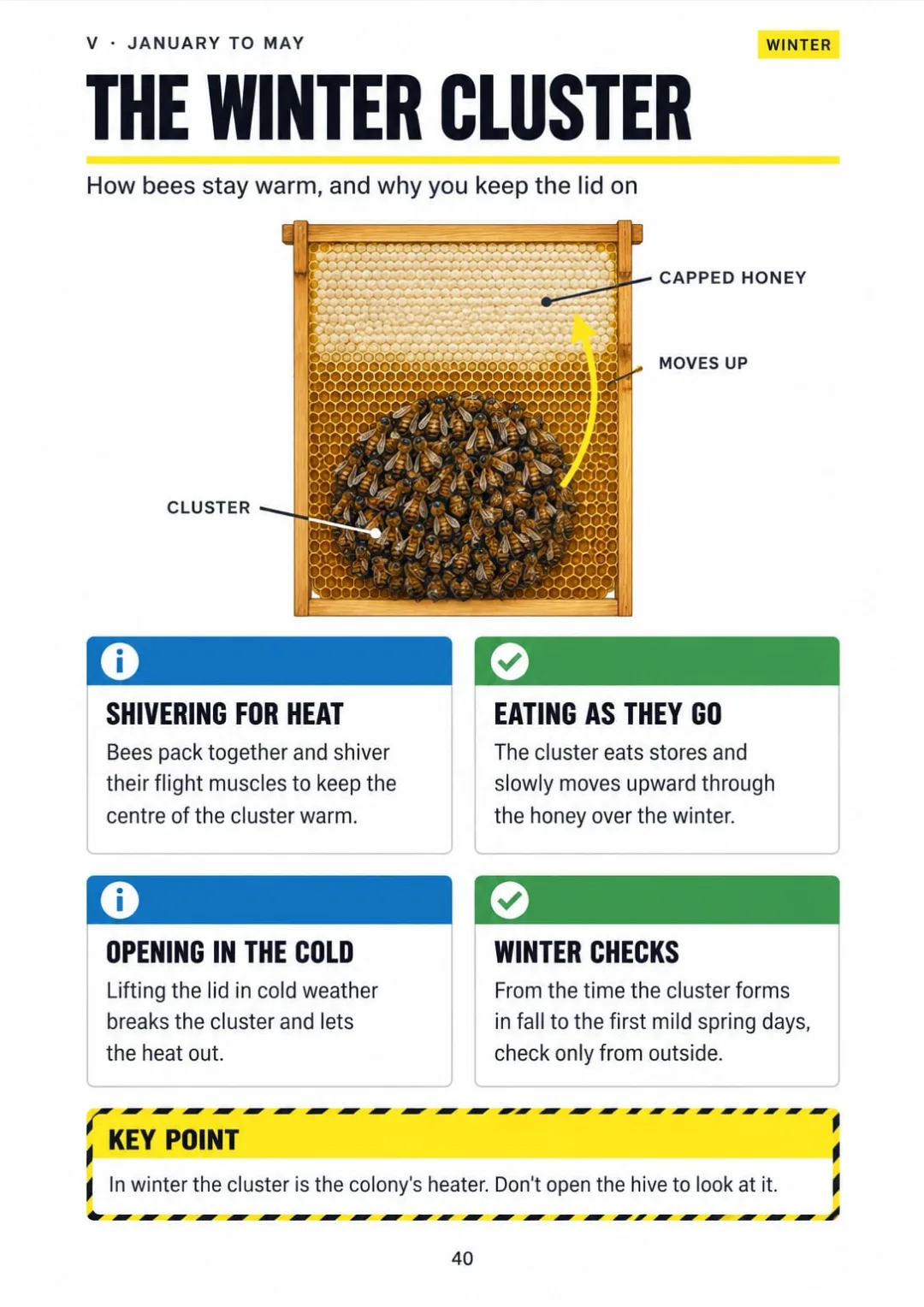
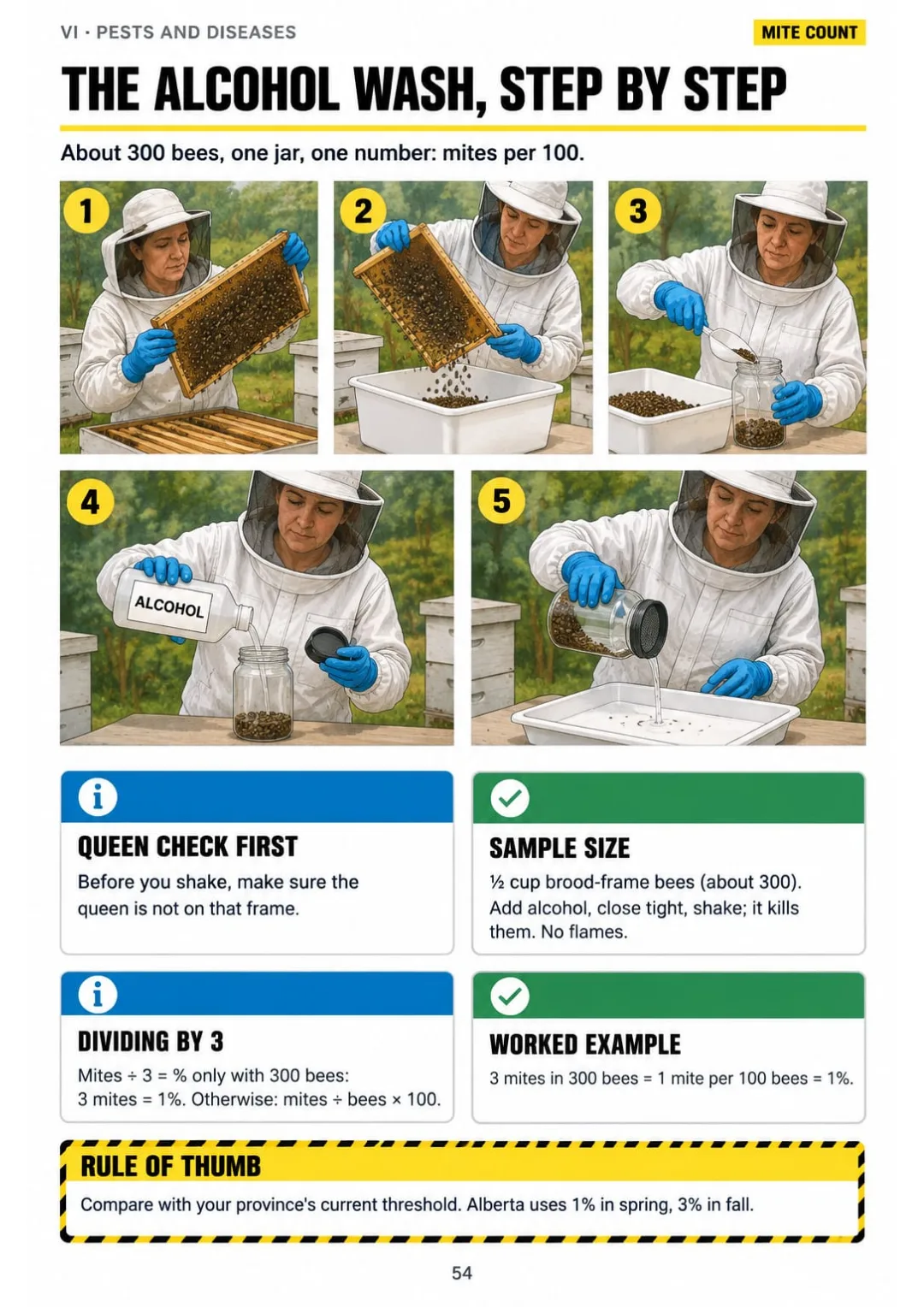
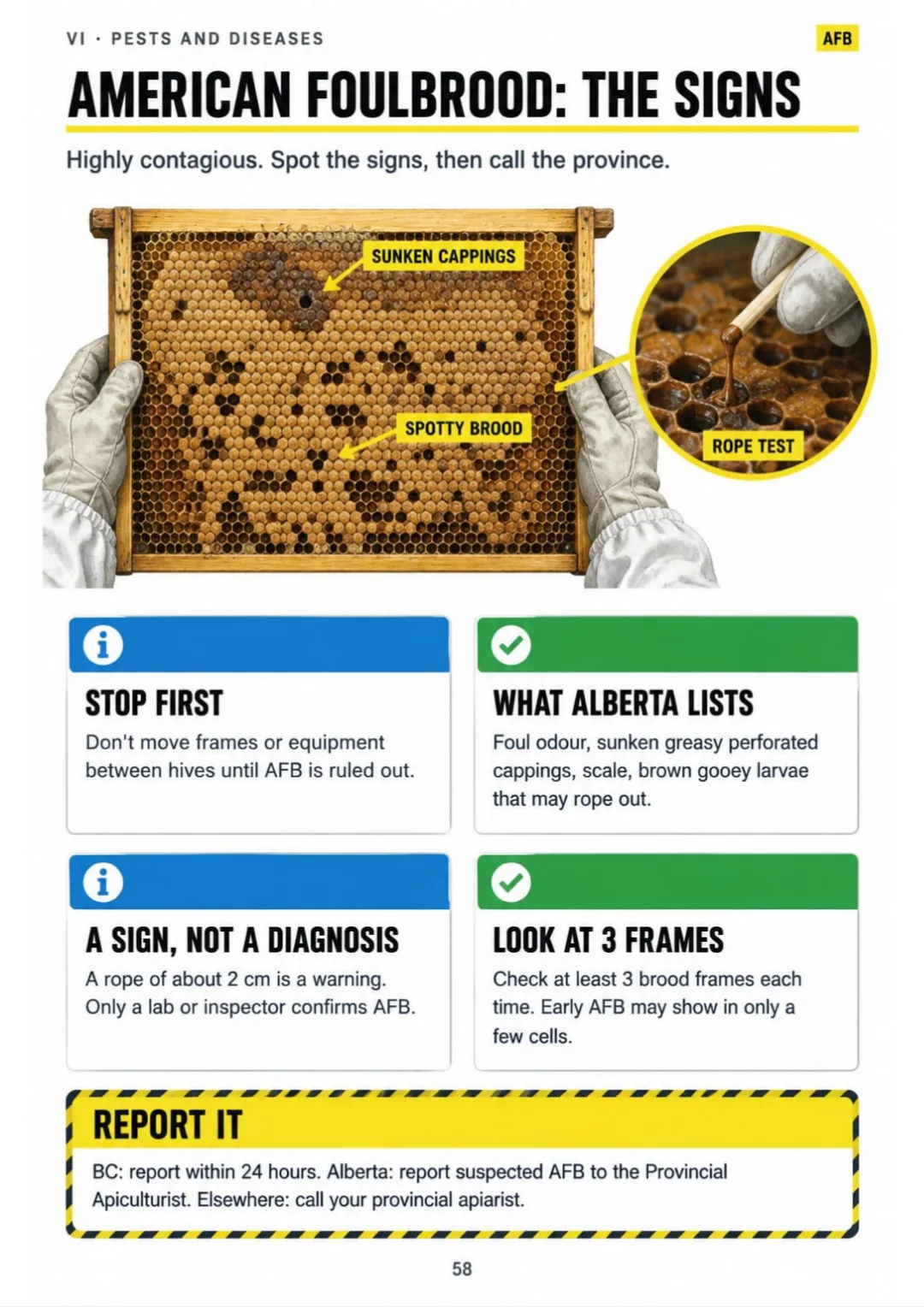
The rest of the book works the same way: the 16-21-24 rule (16 days from egg to queen, 21 to worker, 24 to drone), reading a brood pattern, the winter cluster, the alcohol wash, the signs of American foulbrood. Each one has its own page.
So next time, you look at where the cell is and you know what it means and what to check next, without going back to the manual.

Before your bees arrive, gear and safety, the inspection, what's on the frame, the Canadian season from January to May, pests and diseases, and your season toolkit: 69 pages, all illustrated.
Think of it this way:
It's the first mild afternoon in April. You're standing at the hive with the lid off, smoker in hand, and you need to know what to check first.
You open the book to the four-step inspection. Brood, stores, queen, space: drawn in order, one box for each step.

Same with the winter cluster, hefting a hive by hand, the alcohol wash, swarm cells and American foulbrood: each one on its own page.
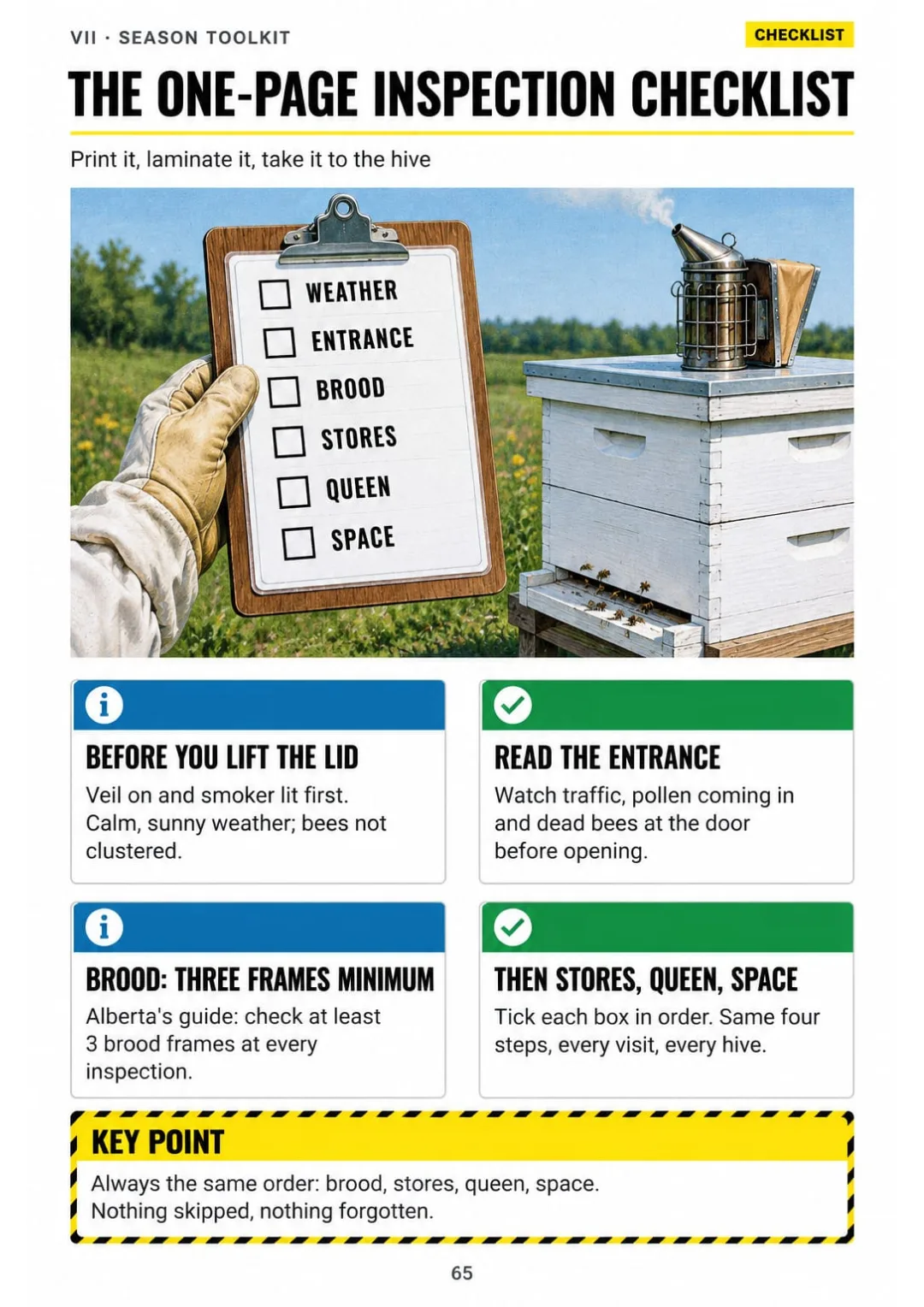
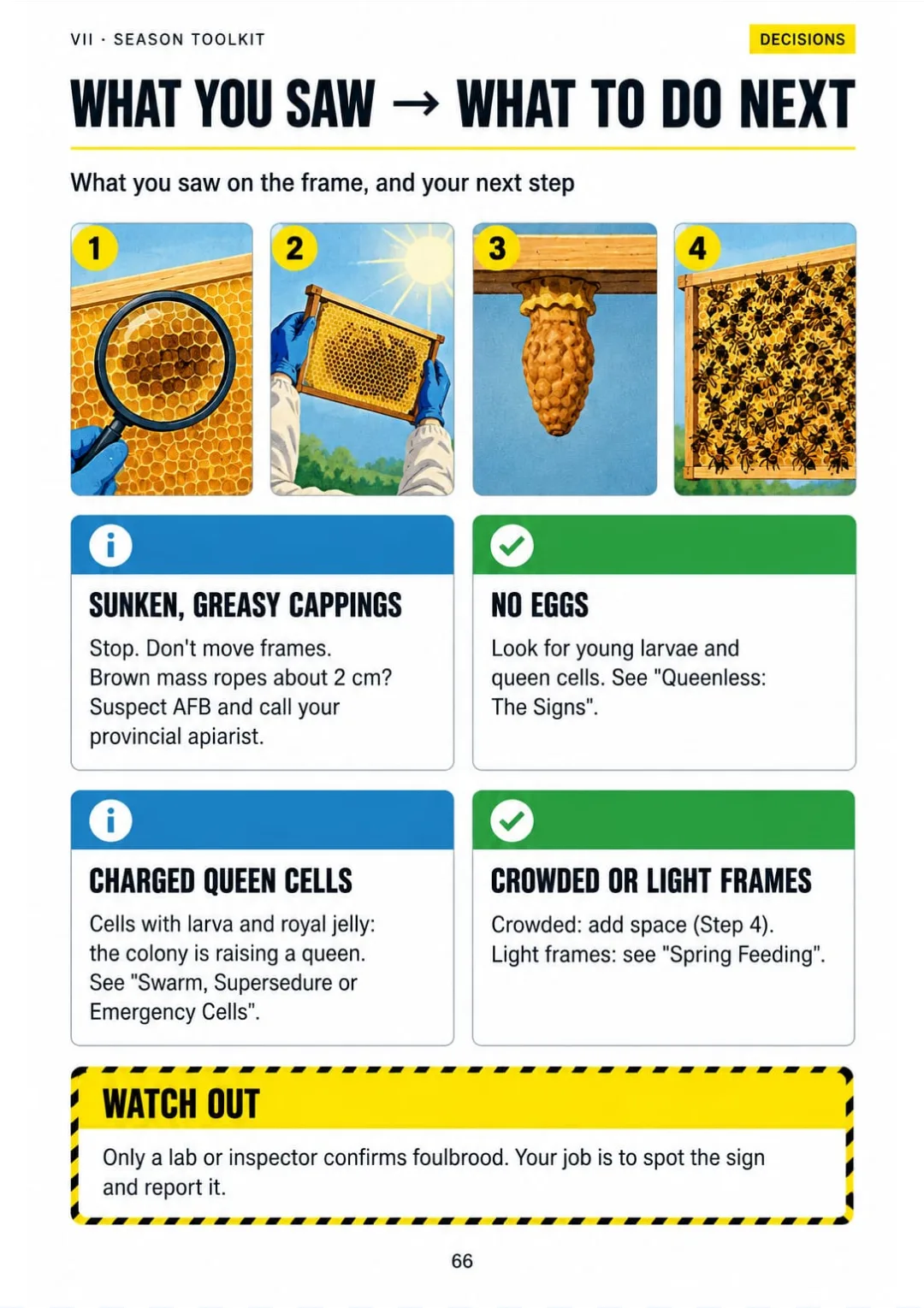
Beekeeping in Practice is 7 parts and 65 topics, all drawn, and at the end a one-page inspection checklist, a what-to-do-next table, a January–May planner and a glossary.
What you see drawn, you don't have to memorize.
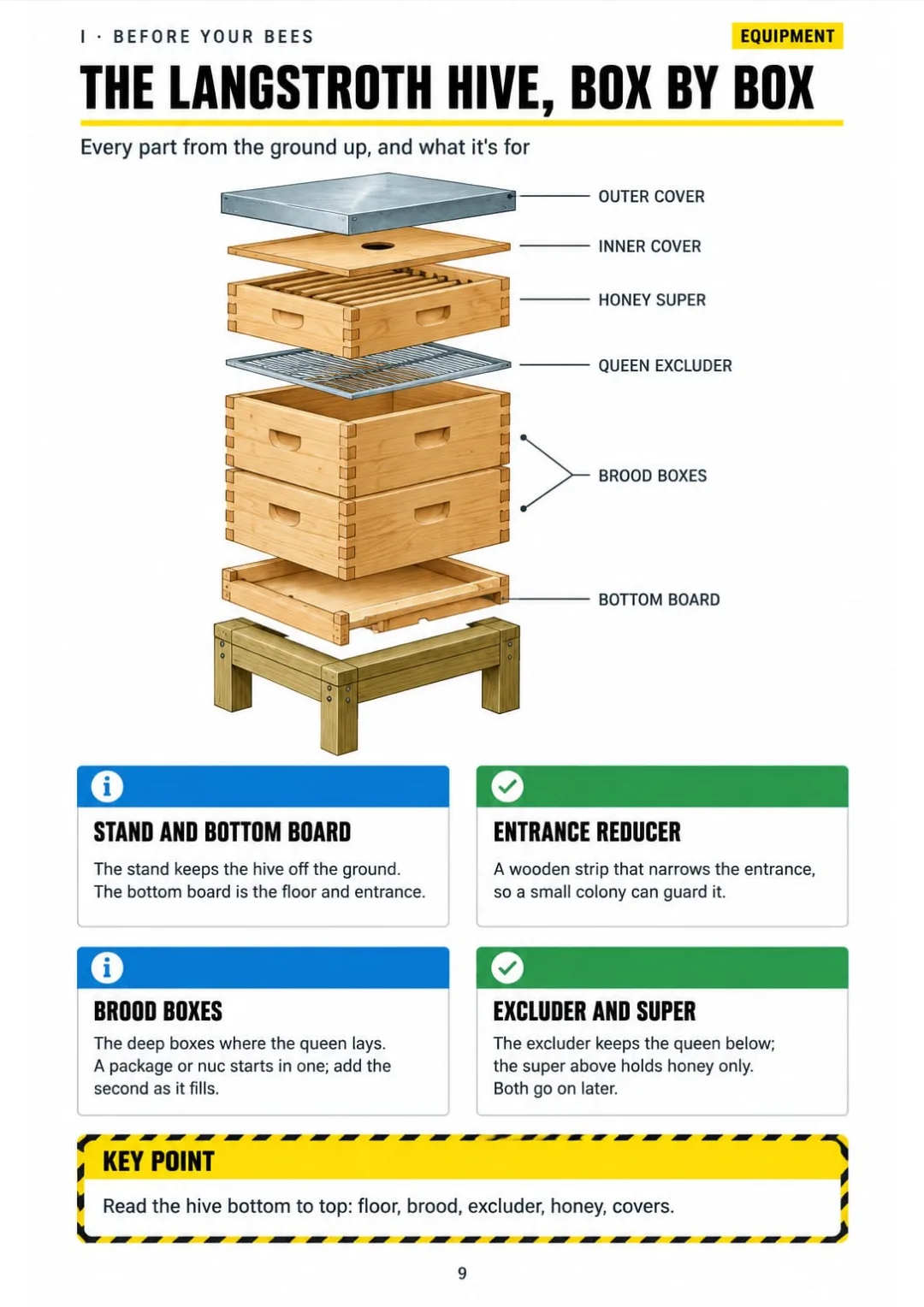
How to use the book, who lives in the hive, the 16-21-24 rule, bee space, the Langstroth hive box by box, registering your hives in Alberta and BC, package or nuc, the hive site, and bears and skunks.
Stings and allergy first, protective gear, a smoker that stays lit, the hive tool and frame grip, when not to open, and how to move calmly at the hive.
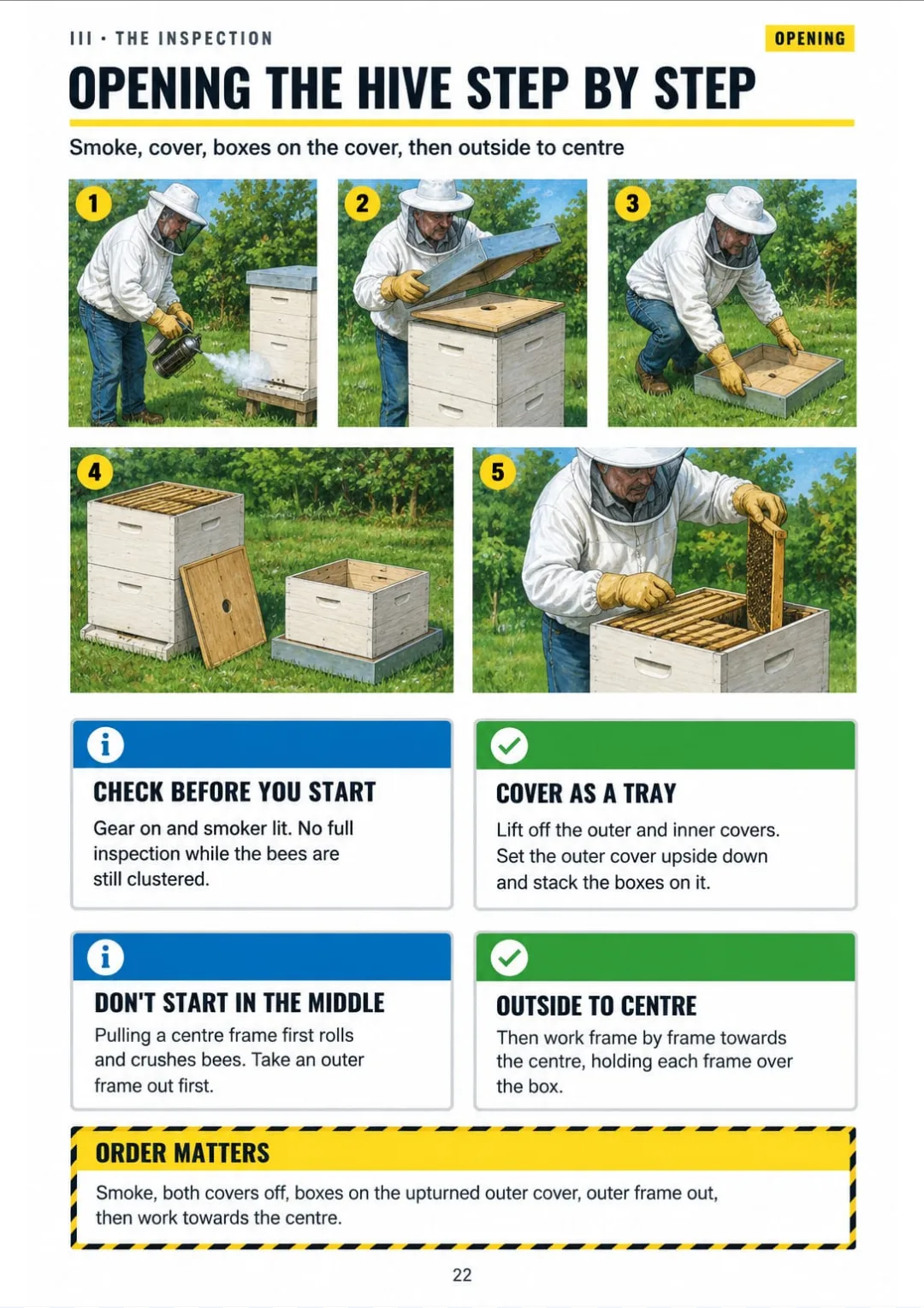
Open any hive the same way every time: the four steps, reading the entrance, opening the hive, brood, seeing eggs, stores, the queen, space, closing up without crushing bees and writing it down in 60 seconds.
Worker vs drone brood, nectar, honey and pollen, queen cups vs charged cells, swarm, supersedure or emergency, brood patterns, queenless signs, laying workers, drone-laying queens and healthy larvae.
Regional calendars, the winter cluster, outside checks, hefting, cleansing flights, dead-outs, the first spring look, feeding, installing a package or a nuc, build-up, swarm prevention, a simple split, and supers.
Counting varroa, the alcohol wash, sugar roll and sticky board, following the trend, registered products used by the label, the foulbroods, chalkbrood, sacbrood, nosema, notifiable pests and when to call the provincial apiarist.
The one-page inspection checklist, what you saw and what to do next, your January–May planner, frequent first-season mistakes and a glossary at a glance.
At the end of the book: A one-page inspection checklist, a what-to-do-next table, a January–May planner and a glossary.
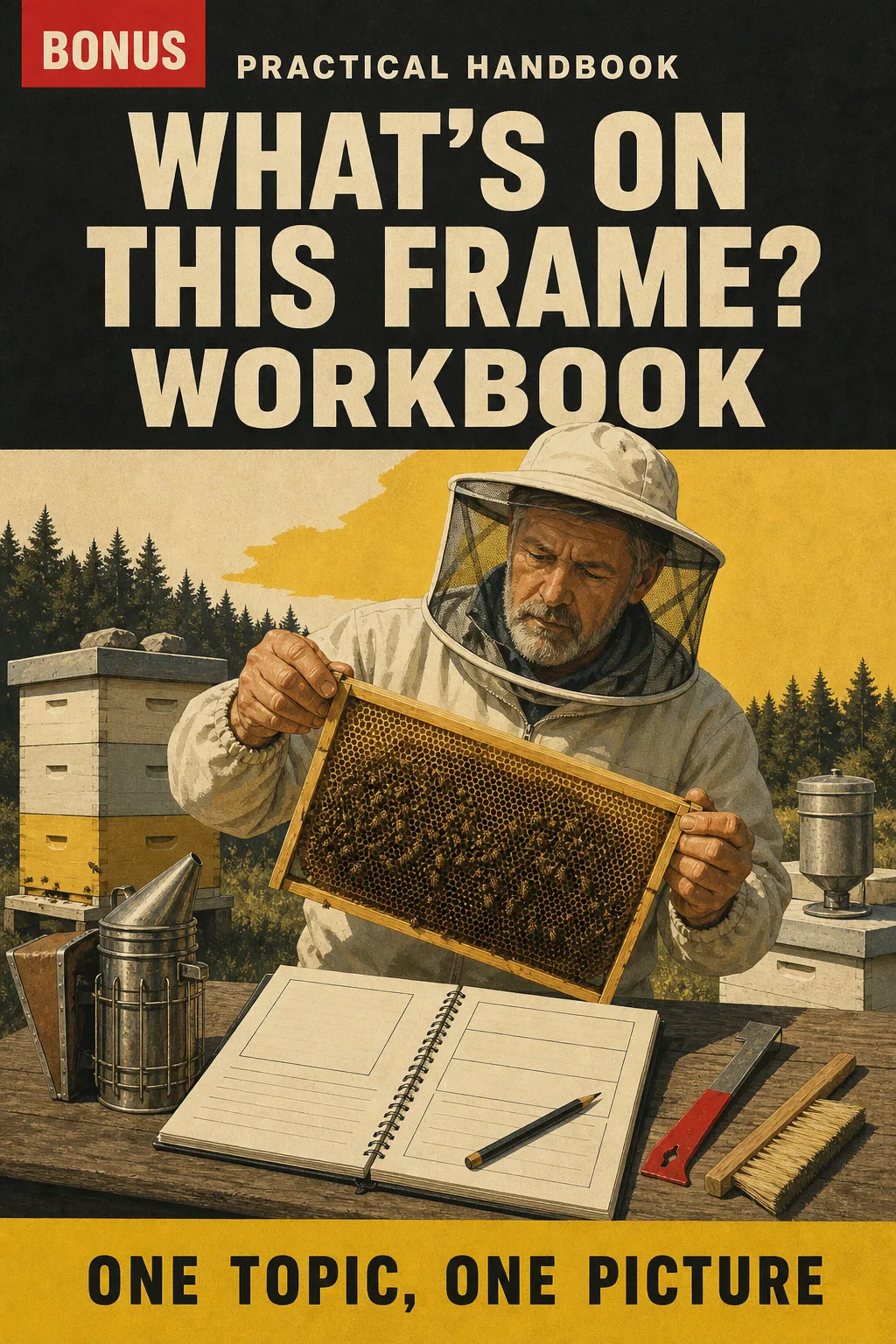
Practise reading frames before spring: look at each drawing, name what you see (capped brood, nectar, pollen, queen cells, drone brood) and check your answer on the next page.

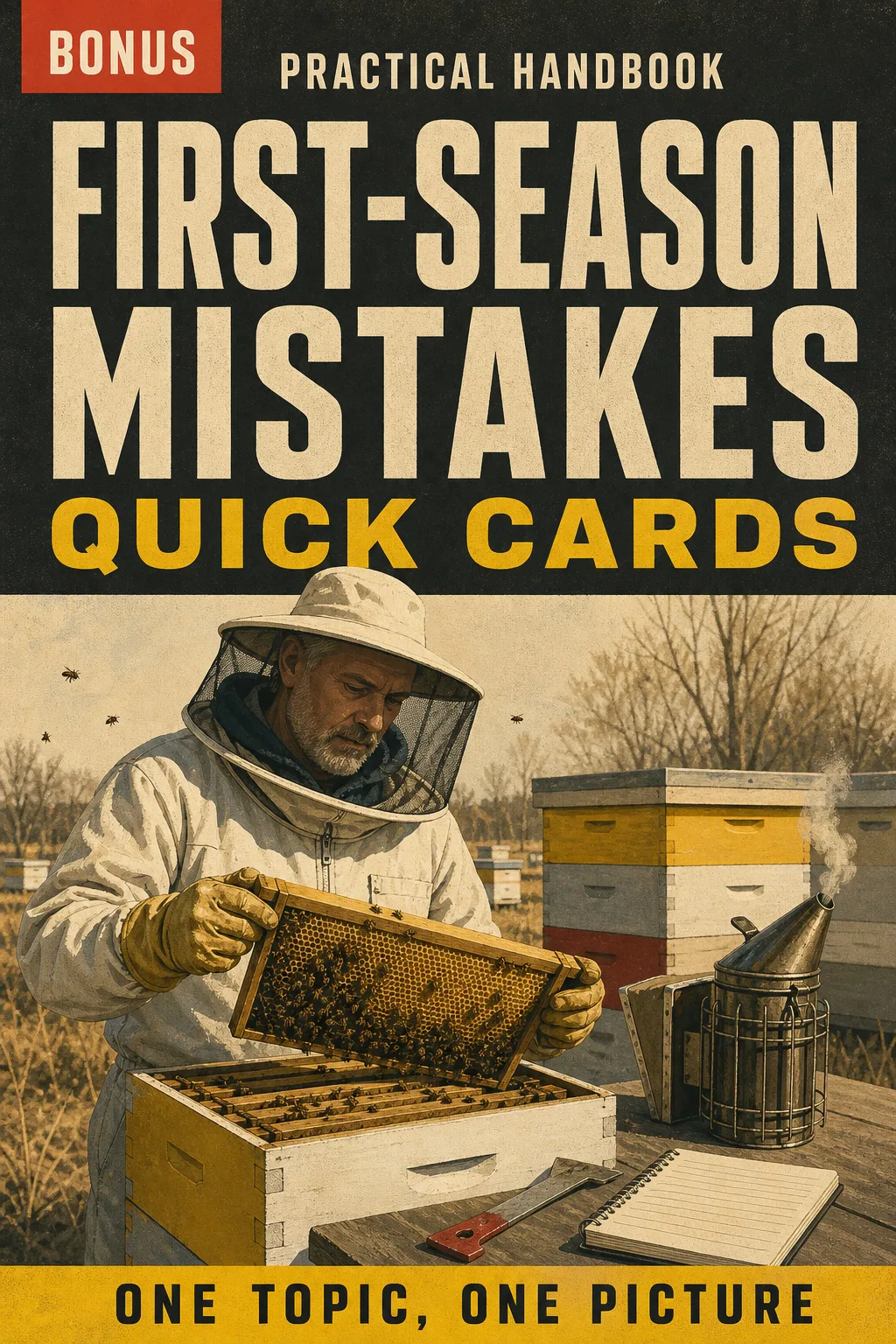
The most frequent first-year mistakes, one card each, so you know what to avoid before you open your first hive.
📄 This is a digital PDF book sent to your email: nothing is printed or shipped.
PDF by email: We email you Beekeeping in Practice as a PDF, together with the two free books. It's a single payment: no installments, no extra charges.
The hives are closed and you have the winter. The book gives you the season from January to May, page by page, so spring doesn't catch you guessing.
You've ordered a package or a nuc. You'll know how to install it, how to open the hive and what to look for at every visit, in the same four steps.
You've opened a hive and weren't sure what you were seeing. The frame pages show brood, stores, queen cells and warning signs at a glance, with a note on when to call your provincial apiarist.
📄 This is a digital PDF book sent to your email: nothing is printed or shipped.
Try Beekeeping in Practice for 30 days, bonus books included.
We refund everything if the file won't open, if the book isn't what you see here, if you were charged twice or if the email doesn't arrive. Just email us.
You pay once. No subscriptions.
Yes. It starts with who lives in the hive and walks you through your first season, January to May. If you already keep a hive or two, the inspection order and the frame pages are for you too. It's written for Canada outside Quebec, with registration pages for Alberta and BC and a note for other provinces.
The registration rules in the book draw on the Alberta Bee Regulation and the BC Bee Regulation under the Animal Health Act, plus guidance from both provincial apiculture programs and CFIA rules on bee imports. The hive, inspection, season and frame pages apply anywhere in Canada outside Quebec. If you're in Ontario or another province, registration and reporting rules differ: the book tells you to check them with your provincial apiarist. For treatments, follow the product label.
No. It's an independent illustrated book. It isn't issued or endorsed by any ministry, agency or beekeepers' association.
No. It's study material to read and keep at hand, and it doesn't come with a certificate. It doesn't replace a hands-on course, your provincial apiarist or inspector, or medical care. For signs of a severe reaction to a sting, call 911.
No. It teaches you to count mites (alcohol wash, sugar roll, sticky board) and to follow the trend over the season. For treatments, it shows you how to use a registered product by its label and when to call your provincial apiarist. It never gives a treatment plan for your hives. The exercises in the workbook are written for this book and aren't official questions from any course or exam.
The book (69 illustrated pages) and the 2 bonus books arrive as PDFs by email, at the address you enter at checkout: What's on This Frame? Workbook, to practise reading frames, and First-Season Mistakes: Quick Cards, with the frequent first-season mistakes, one per card, ready to print.
No. It's a one-time payment. No subscription.
Yes. It's a PDF, so you can print it at home or at a print shop and take it to the bee yard.
You have 30 days. We refund everything if the file won't open, if the book isn't what you see on this page, if you were charged twice or if the email doesn't arrive: just email us.
No more rereading without it sticking.
Swarm cells, brood and stores: you see them drawn, and that's it.
You get to the hive knowing where everything is.
Drawings make studying faster.
The book is right below.
One-time payment: US$ 27 · Guarantee: 30 days · PDF by email
YES, I WANT BEEKEEPING IN PRACTICE FOR US$ 27📄 This is a digital PDF book sent to your email: nothing is printed or shipped.